How to Organize Kitchen Cabinets for a Calm, Functional Space
If your kitchen cabinets feel cluttered, chaotic or just plain frustrating-you’re not alone.
Kitchen cabinets are one of the hardest-working spaces in your home. They’re opened and closed dozens of times a day. When they’re disorganized, it slows everything down-from cooking dinner to putting the groceries away.
With a few simple systems, you can transform your cabinets into a space that feels calm, efficient and easy to keep up.
Let’s walk through exactly how to do it.
Step 1: Start with a Full Reset
Before organizing, you need a clean slate.
Take everything out of your cabinets-yes, everything.
This allows you to:
- See exactly what you have
- Let go of dupes or unused items
- Wipe down shelves for a fresh start
As you go, sort items into categories:
- Keep
- Donate
- Toss (expired or broken items)
Tip: If you haven’t used something in over a year, it likely doesn’t need to take up valuable kitchen space and can be stored elsewhere.
Step 2: Group Like Items Together
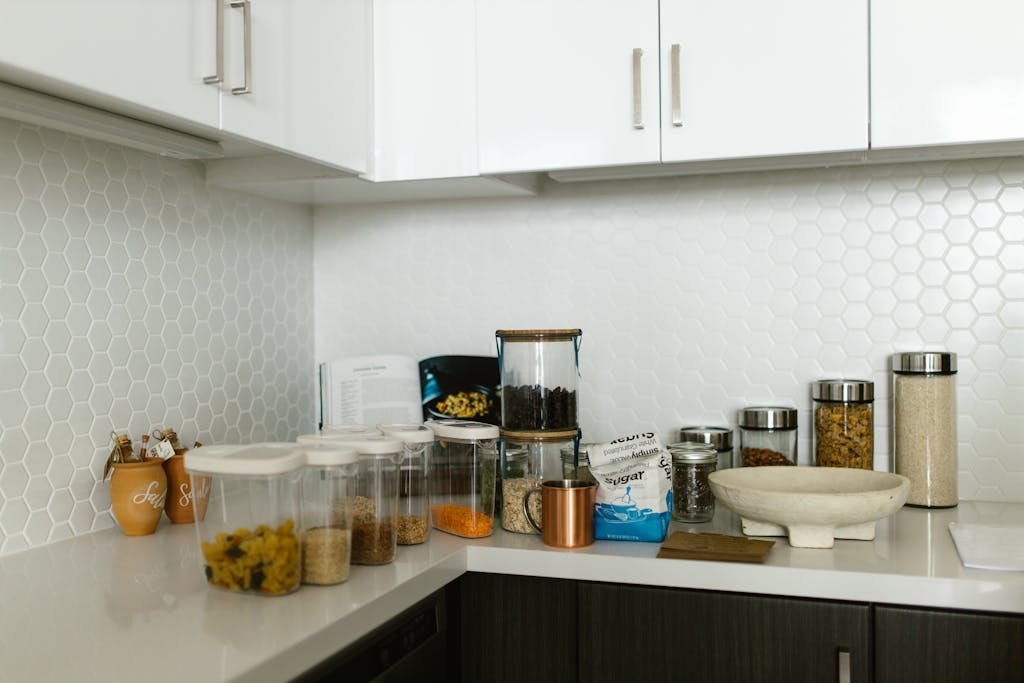
Once everything is out, begin sorting into categories. Remember that the S in SHOO is sort!
Think in categories like:
- Everyday dishes
- Glasses
- Food storage containers
- Baking supplies
- Pantry items
- Cooking tools
This step is key-it creates the foundation for a system that actually works.
Step 3: Assign “Zones” to Your Cabinets
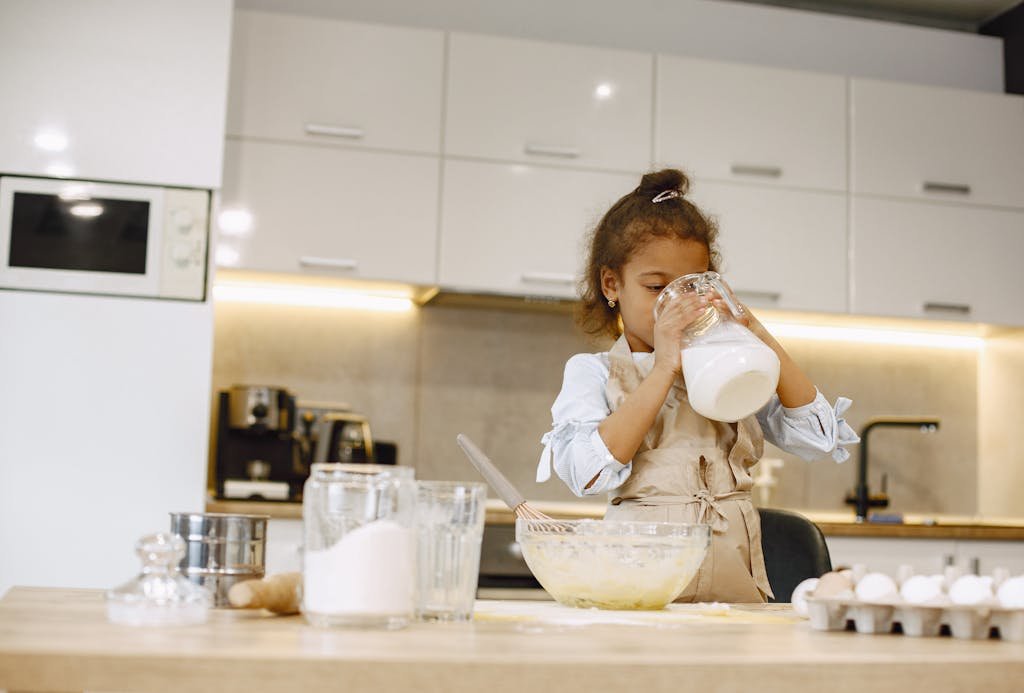
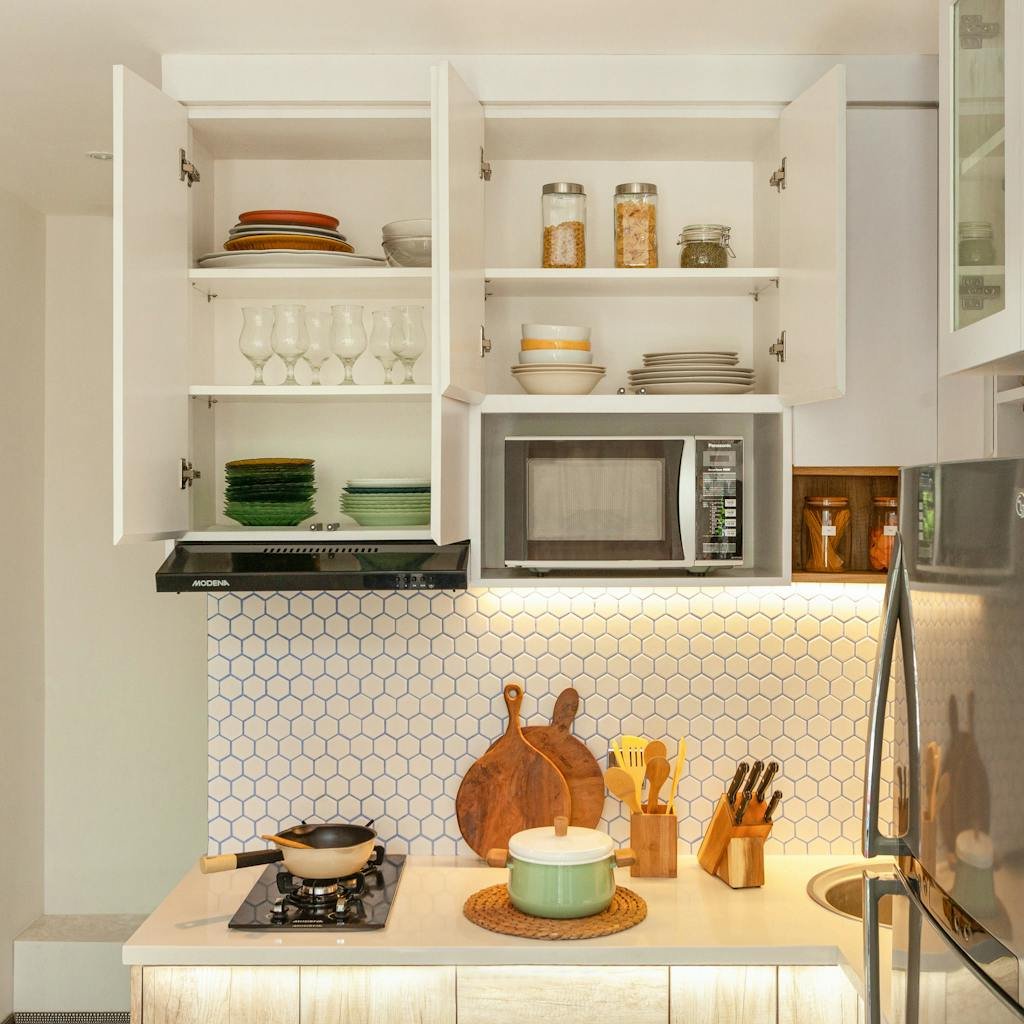
Now that you have categories, give each one a home based on how you use your kitchen.
Create Functional Zones:
- Everyday Zone: Plates, bowls, cups (easy to reach)
- Cooking Zone: Pots, pans, utensils (near the stove)
- Prep Zone: Cutting boards, mixing bowls
- Pantry Zone: Dry goods and snacks
- Storage Zone: Containers, wraps, bags
Think proximity: Store things where you use them-not just where they fit.
Step 4: Use Simple Organizing Tools
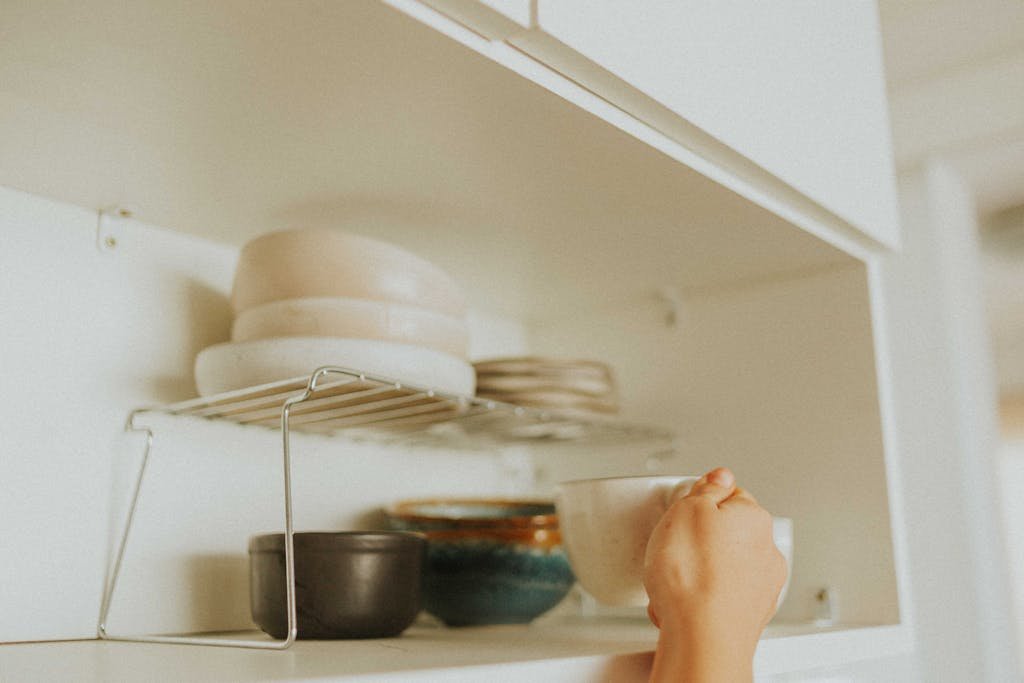
You don’t need fancy products-but a few key tools can make a big difference.
Helpful Cabinet Organizers:
- Shelf risers → double your vertical space
- Clear bins → keep categories contained
- Lazy Susans → perfect for corners or oils/spices
- Drawer dividers → keep utensils tidy
- Pull-out organizers → ideal for deep cabinets
Start small-choose one or two solutions that solve your biggest frustration.
Step 5: Make Everyday Items Easy to Access
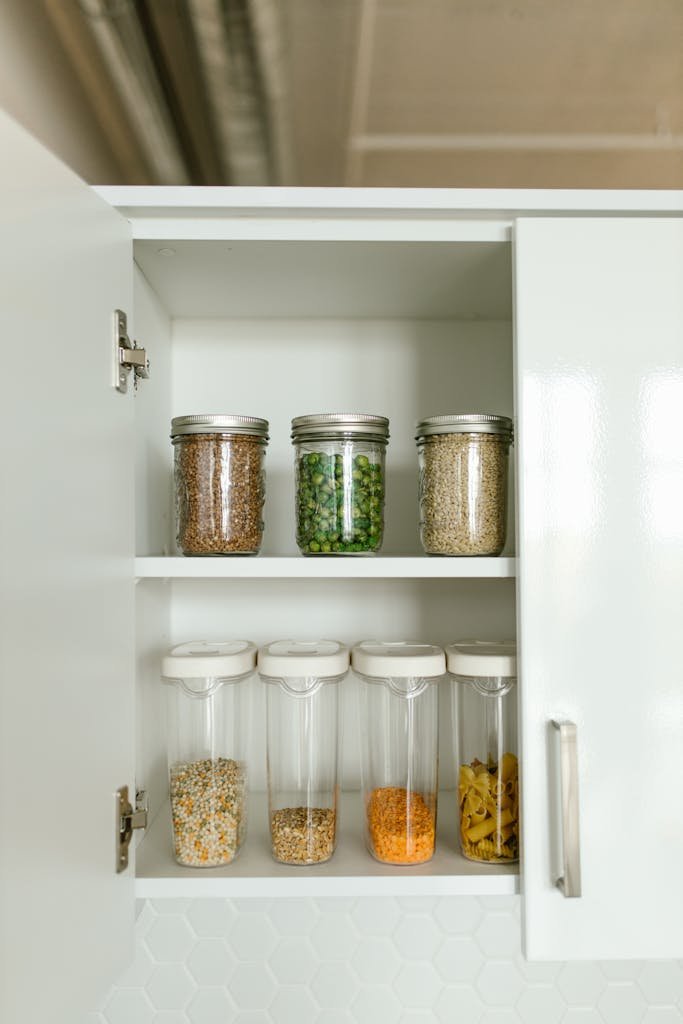
Your most-used items should be the easiest to grab.
Place:
- Daily dishes at eye or waist level
- Frequently used cookware within arm’s reach
- Kids’ snacks on lower shelves (if applicable)
Move rarely used items (like specialty appliances or seasonal dishes) to higher or less accessible cabinets.
Step 6: Contain the Clutter
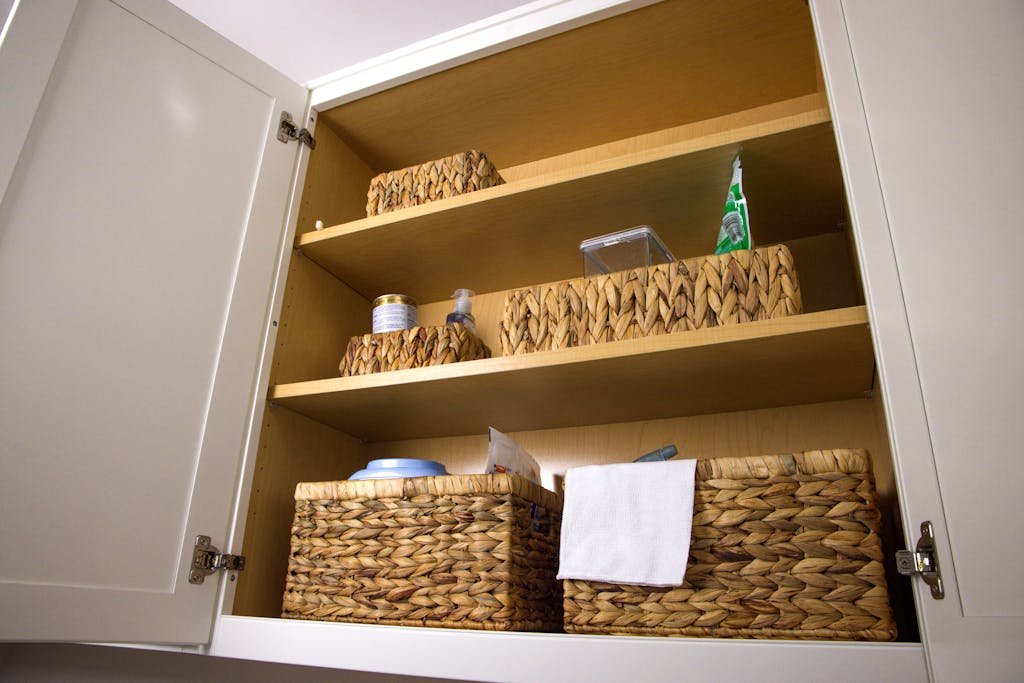
Loose items are what make cabinets feel messy, even when they’re technically “organized.”
Use bins or containers to:
- Group similar items together
- Prevent things from shifting
- Make cleanup quick and easy
For example:
- A bin for snacks
- A bin for baking supplies
- A bin for tea and coffee
When everything has a contained space, your cabinets stay tidy with minimal effort.
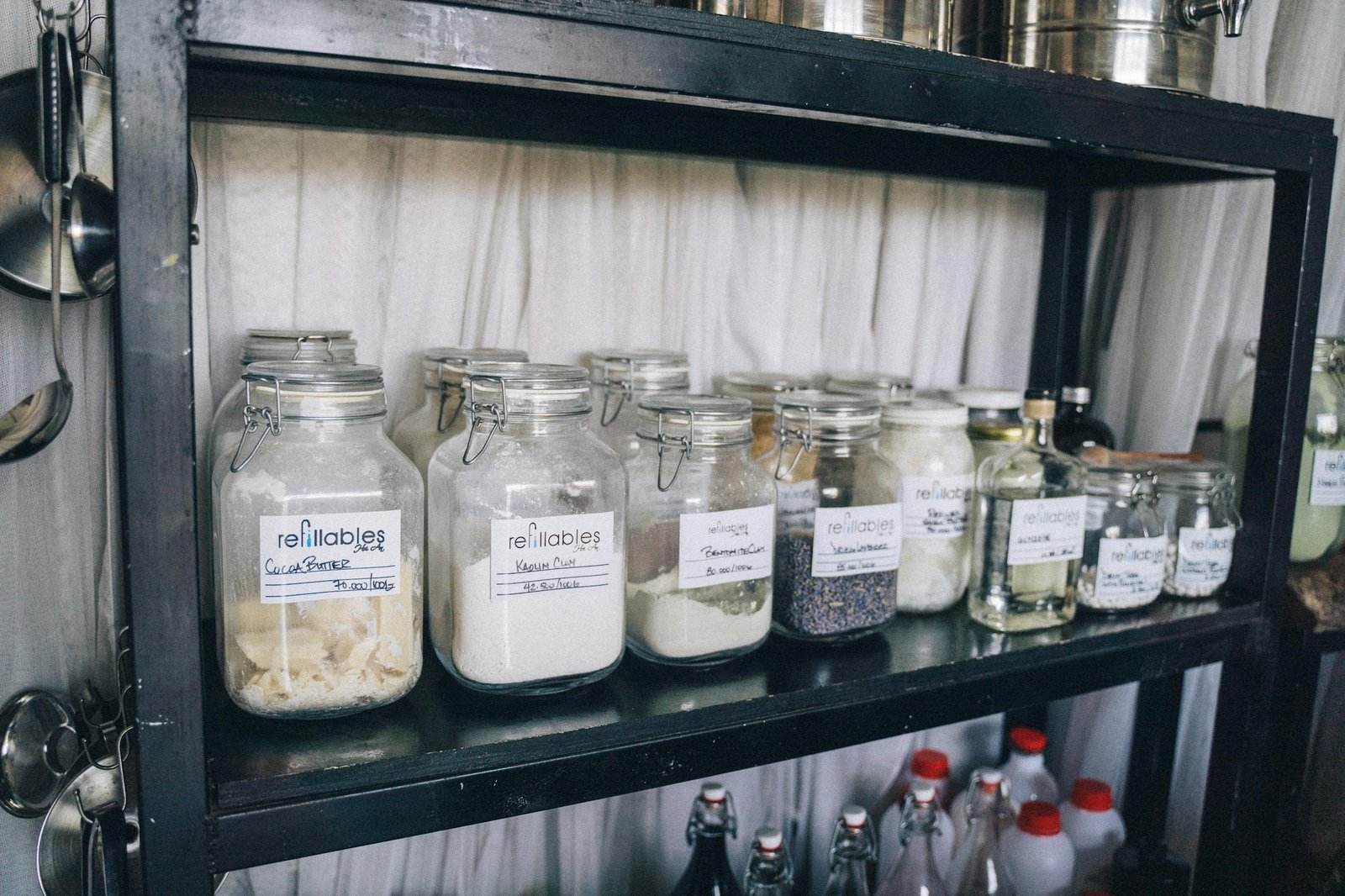
Step 7: Label for Long-Term Success
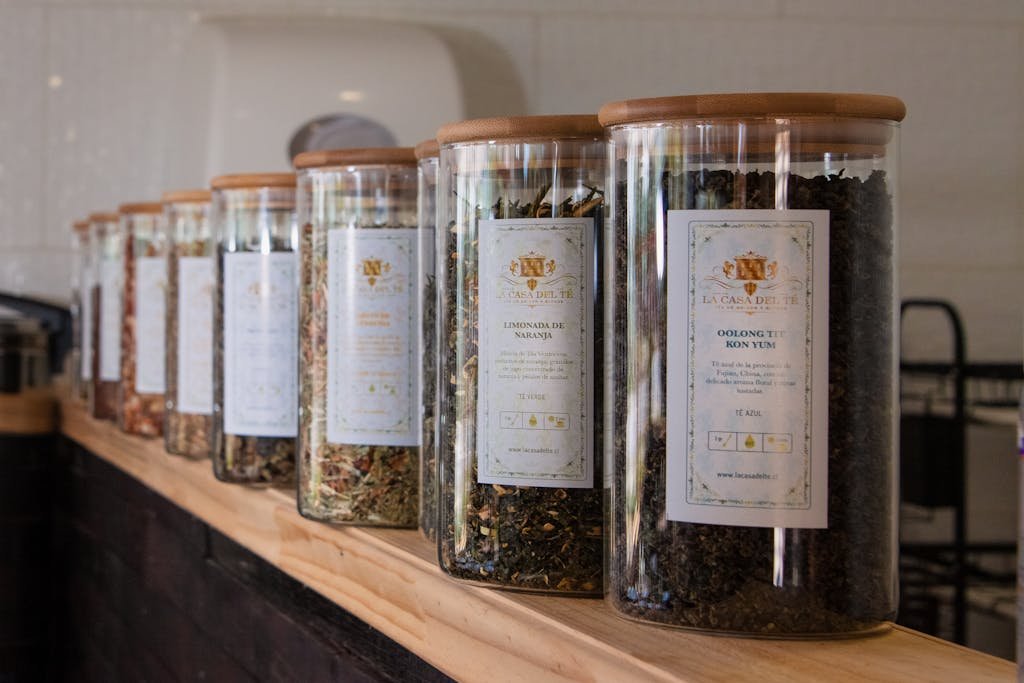
If you want your cabinets to stay organized for more than a week, labels make all the difference.
Labels help:
- Everyone know where things belong
- Reduce decision fatigue
- Keep systems consistent over time
Keep labels simple:
- “Snacks”
- “Baking”
- “Containers”
Clear, readable and easy to maintain.
Step 8: Create a Simple Reset Routine
Organization isn’t a one-time project, it’s a habit.
To keep your cabinets in order:
- Do a quick reset once a week
- Return items to their labelled zones
- Toss expired food regularly
- Adjust systems as needed
Even a 5-minute weekly cupboard check can make a huge difference.
Common Mistakes to Avoid
- Overfilling cabinets (leave some breathing room)
- Buying too many organizers before decluttering
- Storing items where they fit instead of where they’re used
- Creating complicated systems that are hard to maintain
Remember: simple systems are the ones that stick.
An organized kitchen cabinet isn’t about perfection, it’s also about making your daily life easier.
When everything has a place, cooking feels smoother, cleanup is faster and your kitchen becomes a space you actually enjoy being in.
Start small. Pick one cabinet. Create simple zones.
And build from there.
Because a calm kitchen doesn’t happen all at once, it’s created one small system at a time.